Do You Need a Website If You Already Have Instagram?
You already have Instagram.
You post your work, publish Reels, answer DMs, show reviews, share behind-the-scenes content and generate enquiries directly through social media.
So the obvious question is:
why would you need a website as well?
As a web studio, we could give you the usual answer: a website builds trust, generates leads, improves SEO and works for your business 24/7.
But that skips the most important point.
A website is not a magic revenue button. Launching one does not automatically create traffic, enquiries or sales.
For a social-first business, its first job can be much simpler:
make life easier for the customer who is already interested in you.
“Everything is already on my Instagram”
We recently discussed a website with a permanent makeup artist. She works with clients, teaches other professionals and runs an active Instagram account. Social media is already a real part of how her business operates. When we started discussing website content, she made a completely reasonable point:“Just look at my Instagram. Everything you need is already there.”And technically, she was right. The information existed. There were examples of her work, services, results, educational content and answers to common questions. The problem was not the lack of information. The problem was finding it. Some answers were in Highlights. Others were in Reels. Some had been covered in Stories. Important details were scattered across older posts. For the business owner, this can feel completely normal. They live inside that account every day. They know where everything is. A new customer does not. A new visitor has a much simpler objective: what do you offer, how much does it cost, is it right for me, what does the process look like, where are you based, who will I be dealing with and what happens next? Getting those answers should not feel like research.
Your website does not need to replace social media
This is not a “website versus Instagram” argument. Social media can be excellent at what it does. It can attract attention, demonstrate personality, show real work, build familiarity, publish social proof and keep an audience engaged. Someone sees your Reel. They become interested. They open your profile. They like what they see. Then they tap one link and arrive somewhere designed specifically to answer the questions that matter before they contact you. Social media created interest. The website created clarity. For many small and service-based businesses, that is enough reason for the website to exist.Customers do not always want to start a conversation
Imagine finding a product you like on social media. You open the account and want to know the price. Instead, you see: “DM for price.” But perhaps you do not want to DM anyone yet. You are not ready to buy. You are still trying to understand the offer. What does it cost? What is it made from? Which sizes are available? How long is delivery? What is included? Is there a warranty? Only after answering those questions can you decide whether a conversation is worth starting. Interest is not the same thing as consent to a sales conversation. Sometimes customers simply want to browse, compare, think, close the page, return later or send the link to someone else. A good digital experience allows them to do that.Do not force a customer to become a lead too early
From the business side, collecting a contact as early as possible can seem attractive. Once someone sends a message, there is an opportunity to answer questions, recommend an option and move the conversation towards a sale. That is why we see tactics such as: “DM for pricing.” “Contact us for details.” “Leave your number to receive the catalogue.” These approaches can work in certain markets and campaigns. But they should not automatically become the default experience. If you are building a serious brand, selling a considered service or offering a higher-value product, the customer will usually need more information before making a decision. The better question is: are you making that decision easier or harder?This is where a website becomes useful
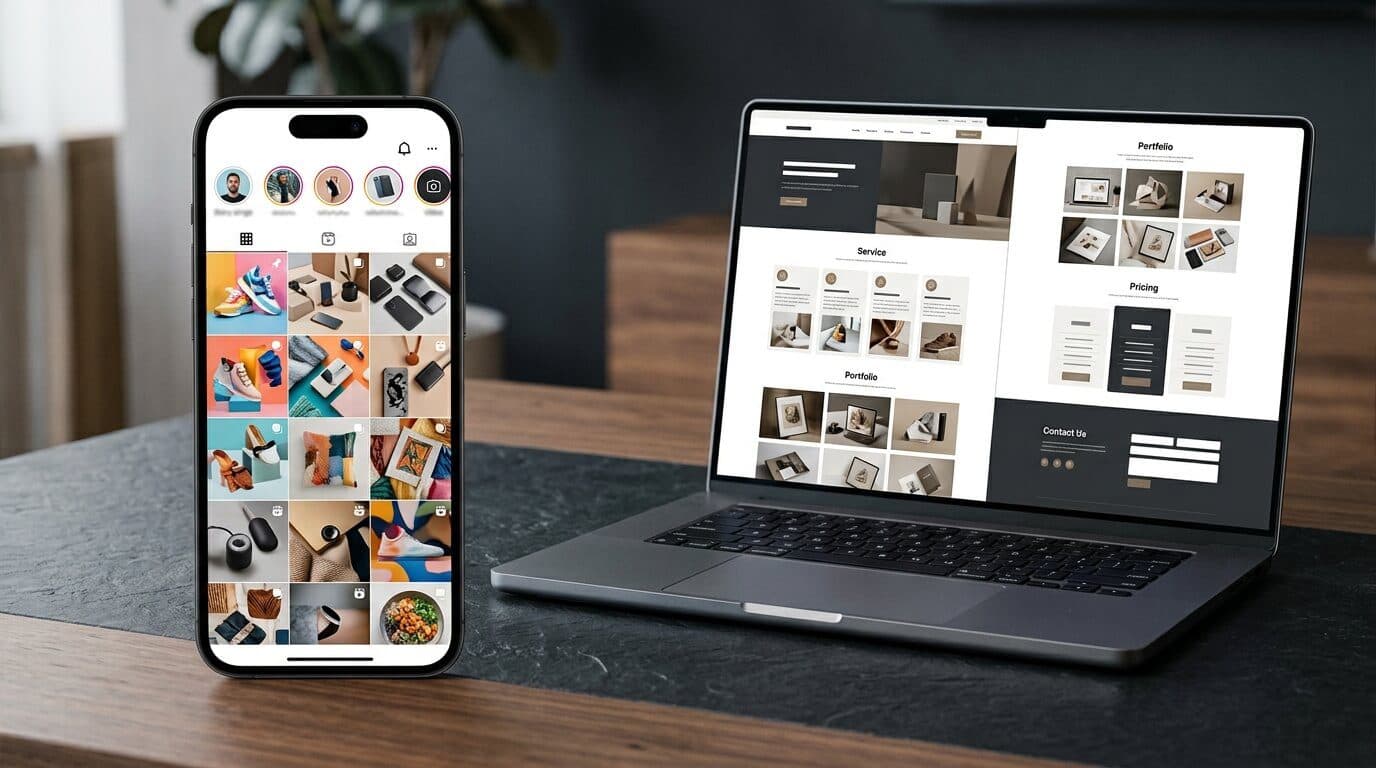
For a social-first business, a website can have one very practical purpose: give potential customers one clear place to understand the business on their own terms. Take the same permanent makeup artist. A visitor can leave Instagram, open the website and immediately find:- services;
- pricing;
- portfolio;
- treatment information;
- important conditions;
- location;
- frequently asked questions;
- booking options.
Customer convenience also benefits the business
If the website answers common questions, the owner or sales team does not have to answer the same things repeatedly throughout the day. The customer can qualify the offer for themselves. And when they eventually make contact, the conversation can move from:“Hi, how much is it?”to:
“Hi. I looked through your services and pricing. I’d like to book this option. What availability do you have next week?”The website did not replace the human interaction. It simply made that interaction more useful.
A website is not a money button
You can build an excellent website and receive no new organic leads from it during the first month. That does not automatically make the website useless. Imagine that 200 people visit it every month from Instagram. They explore your services, understand your pricing, review your work and then return to Instagram to send a DM. The final enquiry may still be attributed to Instagram. But the website may have played an important role in the decision. Social created awareness. The website explained the offer. The customer gained confidence. The DM became the point of contact. It is one customer journey.Over time, the website can become more than that
Once a website exists, it can also create opportunities beyond the audience you already have. Some customers will never discover you through Instagram. They may search directly for a service in their city or compare providers through search. A website gives the business an opportunity to appear in those journeys as well. But expectations need to remain realistic. Having a website does not mean Google will place it on page one. Search visibility depends on demand, competition, relevance, content quality, reputation, technical quality, local signals and ongoing work. Organic acquisition should therefore be treated as long-term potential, not an automatic promise attached to a website launch. Today, the website can improve the experience of customers you already reach. Over time, it may also become a source of customers who had never heard of you before. That is when the website starts behaving like a genuine owned digital asset.There is another reason an owned website is becoming more valuable: AI
Imagine a customer finds your company on Instagram. They like what they see, but they do not want to manually search through months of content. Instead, they open an AI assistant and ask:“Look into this company for me. What do they offer? What are their prices? Where are they based? What should I know before booking?”That creates a new challenge for businesses whose information exists only inside social platforms. Social content can be fragmented across posts, short-form video, Stories, Highlights, captions and comments. A website gives the business far more control. You decide what is published. You decide what is current. You can clearly present your services, pricing, locations, team, conditions, frequently asked questions and contact information. Your website becomes an owned source of truth about the business. Today, that information is useful to the customer. Increasingly, it can also be useful to the tools customers use to research you. No one can predict exactly how people will search five years from now. But one principle is unlikely to disappear: clear, accurate and accessible information about your business will remain valuable.
Simply having a website is not enough
A website can be just as confusing as a social profile. You can create a page with unclear navigation, hidden pricing, vague copy and a button that says “contact us for more information.” If the customer still cannot find what they need, what exactly has improved? The goal is not to own a website. The goal is to make the customer journey easier.Not every business needs a large website
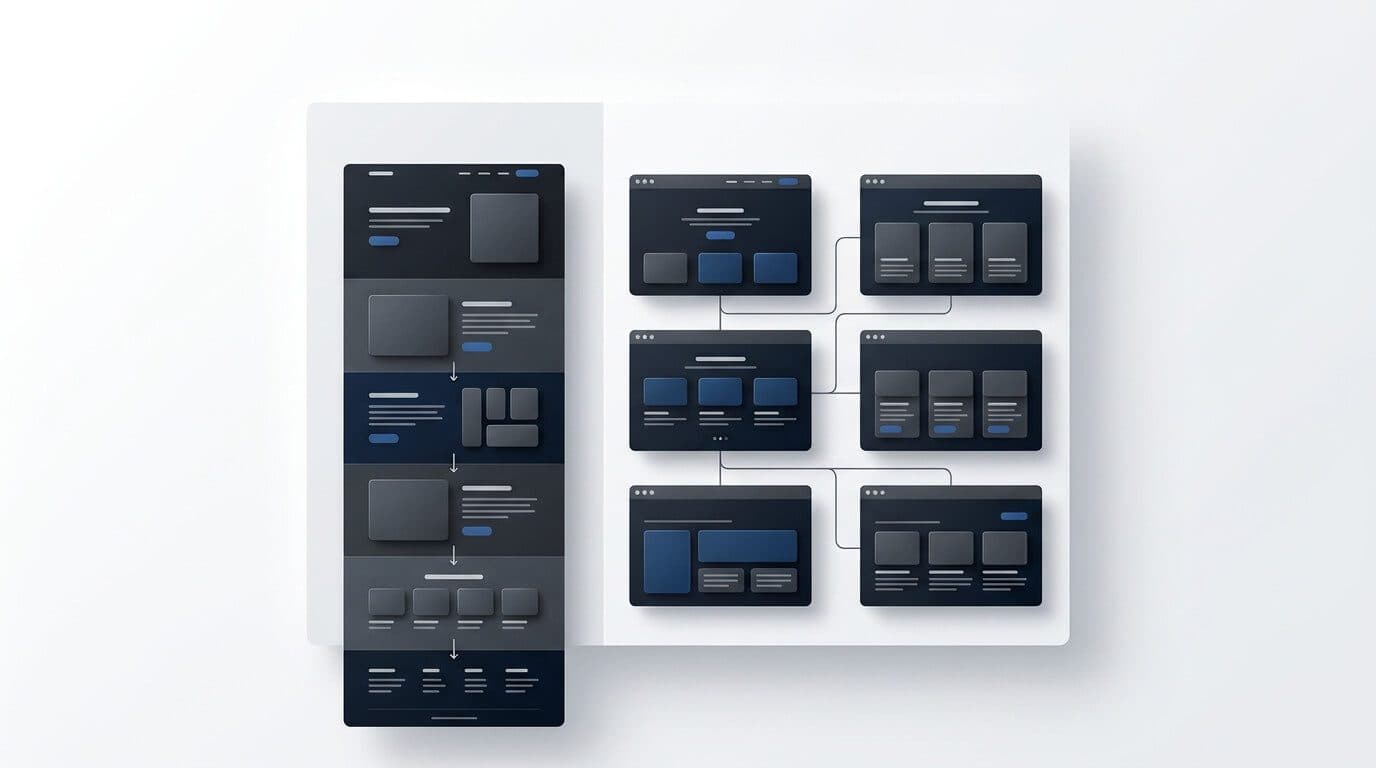
A small business does not automatically need dozens of pages. Sometimes one focused landing page is enough. If a customer only needs to understand a few services, view the work, see pricing and know how to book, one well-structured page may do the job perfectly. As the business grows, the website can grow with it. The number of pages is not the point. The quality of the customer journey is.Look at your business through the eyes of a first-time visitor
Try a simple test. Pretend you know nothing about your own company. Open your social profile as a new customer. Within a few minutes, can you understand:- what the business actually offers;
- whether it is relevant to you;
- what it costs;
- what the options are;
- what the process looks like;
- where the business is based;
- why it should be trusted;
- what you should do next?
How TimeKairos approaches websites
When a social-first business comes to TimeKairos, we do not think the first question should be:“What kind of website do you want?”A more useful question is:
“What does your customer need this website to do?”Which questions should it answer? What should the customer understand? What do they need to see before they feel ready to contact you? Our goal is not simply to give the business another URL. It is to create a destination that someone can open from Instagram, TikTok, Google or a recommendation and think:
“Great. Now I understand.”