Landing Page vs Multi-Page Website: Which Is Better in 2026?
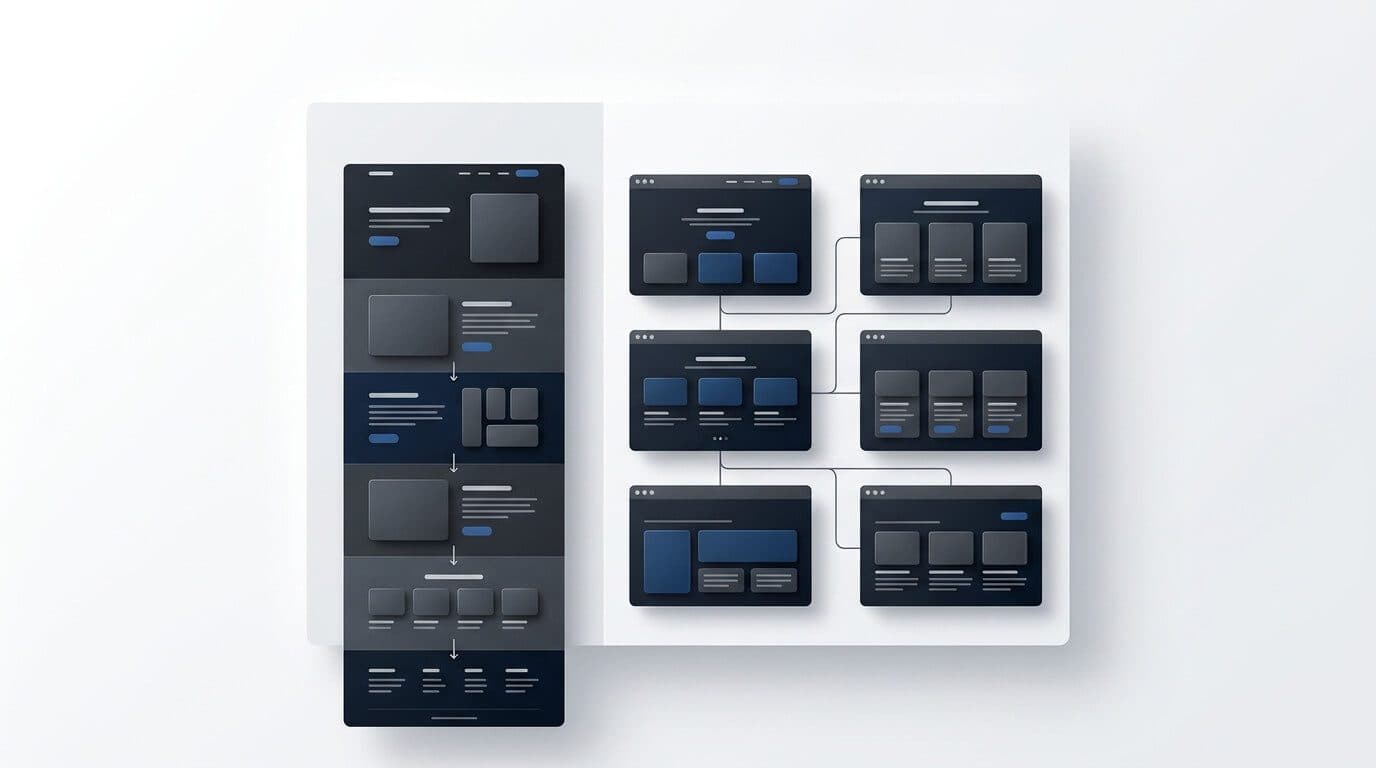
You know your business needs a stronger online presence. The harder question is what to build: a focused landing page or a full multi-page website?There is no universal winner.
A landing page can be the better option for a single offer, paid advertising campaign, product launch or market test. A multi-page website usually makes more sense when a company offers several services, relies on organic search or needs room to build authority over time.
The decision should therefore start with your business model, acquisition strategy and customer journey — not with the number of pages you think a website is supposed to have.
What is a landing page?
A landing page is a focused web page built around one primary offer and one primary conversion goal. That conversion may be:- requesting a quote;
- booking a consultation;
- starting a free trial;
- registering for an event;
- buying a specific product;
- submitting a lead form.
What is a multi-page website?
A multi-page website separates different types of information across dedicated URLs. A typical business website might include:- Homepage;
- About;
- individual Service or Product pages;
- Case Studies;
- Industries;
- Resources or Blog;
- FAQ;
- Contact.
Landing page vs website: quick comparison
Factor Landing Page Multi-Page Website Primary purpose Convert visitors around one offer Represent and grow the broader business Paid advertising Excellent for focused campaigns Effective when campaigns lead to relevant service pages SEO potential Focused around a limited set of search intents More opportunities to target different search intents Scalability Limited High Launch complexity Usually lower Usually requires more planning and content Best fit One offer or campaign Multiple services, products or audiencesWhen a landing page is the better choice
1. You are promoting one clear offer
If the visitor only needs to understand one product or service, a focused page may be all you need. Common examples include:- a SaaS product launch;
- a webinar or event;
- a consulting offer;
- a downloadable resource;
- a new service;
- a specific B2B solution.
2. Paid acquisition is your main traffic source
Landing pages are particularly useful for Google Ads, Meta Ads, LinkedIn Ads and other paid campaigns because the page can closely match the promise made in the ad. If someone clicks an ad for a specific service, they should immediately see information about that service rather than having to search through a generic corporate homepage. The smaller the gap between the ad, visitor intent and destination page, the easier the experience is to understand.3. You are testing a market
A new idea does not always need a large website. A focused landing page can help a startup or established company test a new market, offer or positioning before investing in a larger digital platform. You can launch, drive qualified traffic, measure demand and use the results to decide what deserves further investment.4. There is one primary conversion goal
If the only action that really matters is booking a demo, requesting a quote or starting a trial, a focused experience can reduce unnecessary choices.When a multi-page website makes more sense
1. You offer multiple services or products
Imagine a company offering strategy, design, development, SEO and ongoing support. Trying to explain all of those services properly on a single page can quickly create an oversized landing page with competing messages. Each service may have its own:- target customer;
- value proposition;
- case studies;
- FAQs;
- sales objections;
- search demand.
2. Organic search is an important acquisition channel
A multi-page website gives a business more opportunities to create pages around different search intents. For example, a digital company could have dedicated pages for:- corporate website development;
- landing page development;
- website redesign;
- website migration;
- technical SEO audits;
- ongoing website support.
3. Customers need to research before buying
The higher the price or complexity of the purchase, the more reassurance a potential customer may need. A prospect evaluating a significant B2B engagement may want to review:- case studies;
- company credentials;
- the delivery process;
- industry expertise;
- resources;
- individual services.
4. You expect the business to grow
Your website structure should not only reflect the company you have today. If you expect to add new markets, services, locations, products, resources or customer segments, a scalable architecture makes future growth significantly easier.Which is better for Google Ads?
The most important factor is not whether the destination is technically a landing page or part of a larger website. What matters is how closely the destination matches the user's intent and the message in the ad. If your ad promotes enterprise website development, sending visitors to a generic homepage covering branding, apps, SEO and ten unrelated services adds unnecessary friction. A dedicated enterprise website development page gives users a more direct experience. This means a mature acquisition setup often combines both formats: A multi-page core website supported by focused landing pages for specific campaigns, markets or offers.Which is better for SEO?
For businesses that want to build long-term organic visibility across several topics, a multi-page website is usually more flexible. Different search intents can be mapped to different pages, while internal links help users and search engines understand how those pages relate to one another. However, more pages do not automatically mean better SEO. A website with 100 weak, repetitive pages does not become stronger simply because it is larger. A successful structure still requires:- useful and original content;
- clear information architecture;
- pages built around genuine user needs;
- strong internal linking;
- mobile usability;
- good performance;
- solid technical implementation.
Can you start with a landing page and expand later?
Absolutely. For startups and new business units, this can be a sensible approach:- Define the initial offer.
- Build a focused landing page.
- Launch acquisition campaigns.
- Validate demand.
- Learn which questions prospects actually ask.
- Add new services or content.
- Expand into a broader website when the business case is clear.
5 questions to ask before choosing
- How many distinct products or services do you need to present?
- Where will your traffic come from: paid ads, organic search, social media, referrals or a mix?
- How important is SEO to your growth strategy?
- How much research does a customer need before contacting or buying from you?
- Will the website need to support significantly more content within the next one or two years?